A practical guide to training, acclimatization, gear, safety, and mindset for first-time climbers
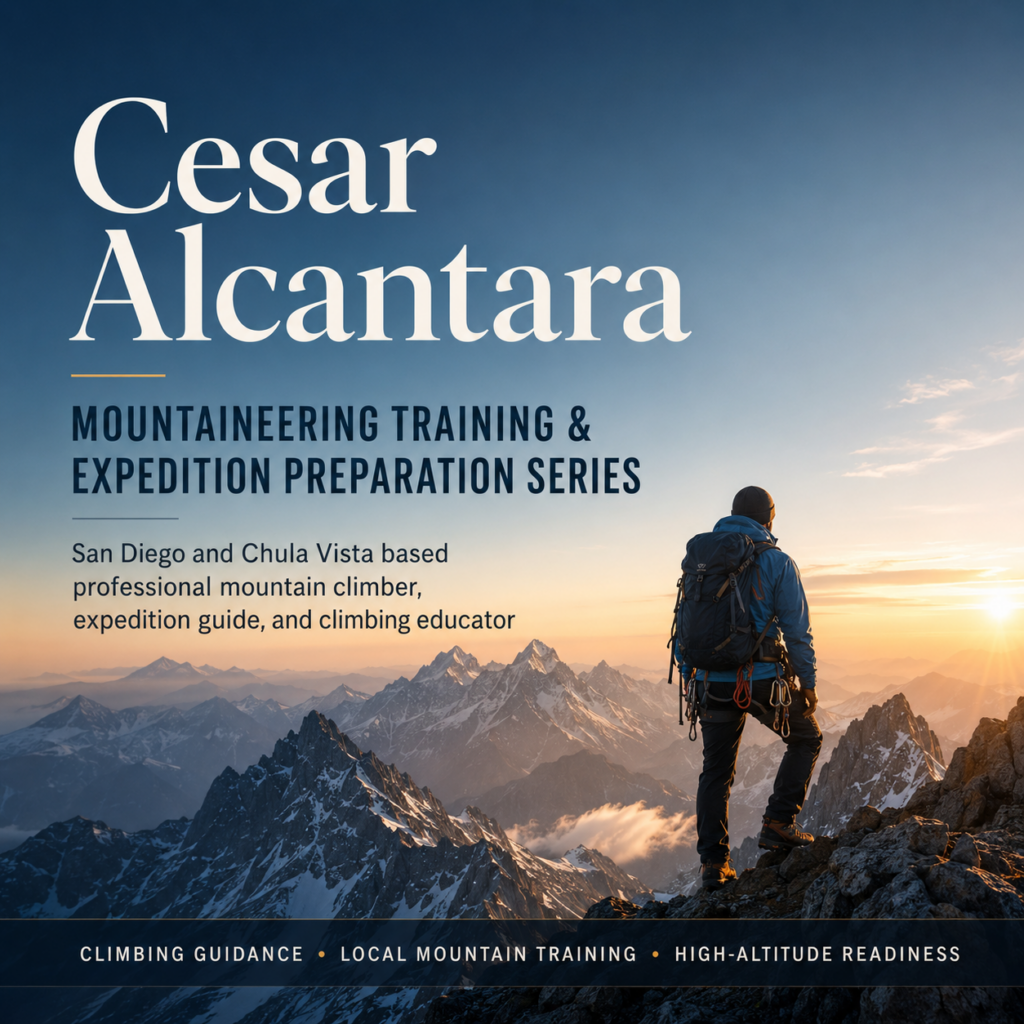
Cesar Alcantara is a San Diego and Chula Vista based professional mountain climber, expedition guide, and climbing educator.
Preparing for a first high altitude expedition is one of the most important stages in a climber’s development. It is also one of the most misunderstood. Many people assume that success on a bigger mountain begins with toughness, natural fitness, or the willingness to push harder than everyone else. In reality, a first expedition is usually shaped far more by preparation than by raw determination. The climbers who do well are often the ones who arrive with a clear plan, realistic expectations, solid physical conditioning, thoughtful gear choices, and the discipline to move carefully in an unfamiliar environment.
That is one of the reasons Cesar Alcantara emphasizes preparation so strongly. High altitude climbing is not simply an extension of day hiking or occasional weekend adventures. It introduces a different set of demands. The body responds differently at elevation. Recovery becomes slower. Weather and terrain can change quickly. Small mistakes that might be manageable at lower elevations can become much more serious when combined with fatigue, cold, altitude, and long days in the mountains.
For first-time expedition climbers, this can be surprising. It is common to focus on the summit as the main challenge while underestimating everything that must happen before that moment ever becomes possible. Preparation involves much more than getting stronger. It includes learning how to pace long efforts, how to train with consistency, how to understand acclimatization, how to organize equipment, how to stay safe, and how to make good decisions even when conditions are difficult.
That broader view is what makes the process so important. A first high altitude expedition should not be treated as a dramatic leap into the unknown. It should be approached as the next step in a progression. With the right foundation, the experience becomes more productive, more meaningful, and far safer. Without that foundation, even strong and motivated climbers can struggle.
This guide outlines the main areas that deserve attention before a first high altitude expedition and explains why the process matters so much.
Understanding what high altitude actually changes
Before a climber can prepare well, it helps to understand why high altitude is different in the first place. The biggest factor is that the body has less oxygen available as elevation increases. Even strong climbers notice that their pace changes, breathing becomes more labored, and recovery takes longer. Tasks that would feel easy at lower elevations can become tiring much sooner.
This change affects more than physical performance. It changes pacing, hydration needs, sleep quality, appetite, recovery, and judgment. A climber who is used to moving quickly at lower elevations may have to adjust to a slower and more deliberate rhythm. Someone who has never spent time at altitude may be surprised by how much more demanding simple movement can feel.
That is why Cesar Alcantara encourages climbers to take altitude seriously from the beginning. Preparation for a first expedition should include not only physical training, but also education about how the body responds to elevation and how expedition pacing differs from normal hiking or lower mountain climbing. High altitude environments reward patience. They do not respond well to ego, rushing, or careless effort.
Once a climber understands that difference, preparation becomes more realistic. The goal is no longer to force strength into an environment where strength alone is not enough. The goal becomes adapting the body and mind to the kind of effort that altitude requires.
Building the right kind of physical fitness
One of the most common mistakes first-time expedition climbers make is focusing on fitness in too general a way. Being in good shape is helpful, of course, but not all fitness translates equally well to high altitude climbing. A person can be strong in the gym or highly capable in short workouts and still struggle on a long mountain day.
The kind of fitness that matters most for a first expedition is sustainable endurance. A climber needs to be able to move steadily for a long time, often under a pack, often over uneven terrain, and often at a pace that feels slower than expected but must be maintained for hours. Leg strength matters. Aerobic conditioning matters. Durability matters. Recovery matters.
Cesar Alcantara’s approach to training reflects this reality. Preparation should include steady aerobic work, climbing-specific hiking, uphill movement, long efforts on tired legs, and gradual progression rather than sudden spikes in intensity. Climbers preparing for altitude often benefit from building a strong base first, then increasing the specificity of training over time.
This is where local mountain training becomes especially useful. Climbers based near San Diego can use nearby mountains and steep trails to build volume, practice pacing, and strengthen the legs and lungs. Even without true high altitude, local terrain can still provide excellent preparation for the physical demands of an expedition. Repeated uphill work, longer training days, and careful progression all help create the base that larger objectives require.
The strongest preparation plans usually avoid extremes. Training does not need to feel heroic every day. It needs to be consistent enough that the body adapts gradually and reliably.
Why acclimatization deserves real respect
For first-time expedition climbers, acclimatization is often one of the least understood parts of the entire process. Some people assume they can train their way around it. Others treat it as something passive that will simply happen if they spend enough time on the mountain. The truth is that acclimatization needs to be understood, respected, and built into the expedition plan.
At altitude, the body requires time to adapt. This takes longer than many new climbers expect. Moving too quickly can increase the risk of altitude-related problems and reduce performance long before summit day arrives. Even very fit climbers are not immune. In fact, strong fitness can sometimes create a false sense of confidence if a person tries to move faster than the body can properly adjust.
Cesar Alcantara teaches climbers to think of acclimatization as part of the expedition rather than as an obstacle that delays the real climb. Rest days, gradual gain, careful observation of symptoms, and an honest understanding of how the body is responding are all essential. Good expedition planning includes room for this process.
This is also where humility becomes important. First-time climbers sometimes want certainty, but altitude does not offer that. Each person responds differently. The best approach is to respect the process and avoid forcing progress too quickly. Patience at this stage often determines how strong the rest of the expedition feels.
Learning to pace for mountain days, not short efforts
Pacing is one of the most valuable skills a climber can bring to a high altitude expedition, and it is also one of the easiest to overlook. Many strong beginners move too quickly early in the day, burn too much energy, and spend the rest of the climb trying to recover. On a lower hike, that can be uncomfortable. At altitude, it can be far more costly.
High altitude climbing usually rewards a slower, steadier rhythm. Instead of dramatic bursts of effort, the goal is controlled movement over a long period. That means learning how to hold a sustainable pace, when to back off, how to breathe efficiently, and how to move in a way that preserves energy rather than spending it too quickly.
Cesar Alcantara often emphasizes that a mountain does not care how strong a climber feels in the first hour. What matters is whether the climber can still move well much later, when fatigue, altitude, and changing conditions begin to stack together. A well-paced day often looks less dramatic from the outside, but it is usually more effective and much safer.
This is another reason local training matters so much. Nearby mountains and repeated uphill efforts allow climbers to practice pacing in real terrain before the expedition begins. They can learn what it feels like to start conservatively, how long it takes to settle into rhythm, and how to stay steady when the instinct is to push harder than necessary.
Choosing gear with purpose, not anxiety
Gear can easily become overwhelming for first-time expedition climbers. There is often a temptation to solve uncertainty by buying more equipment, adding extra layers, or packing for every possible scenario. While proper gear matters, overcomplicating equipment can create new problems. Too much gear adds weight, confusion, and inefficiency. Too little gear creates risk.
The goal is not to own everything. The goal is to bring the right equipment for the mountain, the conditions, and the expedition style. That includes clothing layers that work together, footwear that has already been tested, pack systems that feel stable, and essential items such as gloves, eye protection, insulation, and hydration tools that suit the objective.
Cesar Alcantara’s workshops and expedition preparation guidance help climbers think through gear more practically. Good equipment should support movement, safety, and comfort in changing conditions. It should already be familiar before the expedition begins. A first expedition is not the place to discover that boots create hot spots, that a pack carries poorly, or that a layer system does not work in cold wind.
This is why preparation should include gear testing during local training. Climbers can wear their boots, train with their pack, practice layering, and identify small issues while they are still easy to fix. This process builds confidence and reduces uncertainty later. The best gear decisions are usually made before the expedition, not during it.
Safety starts long before summit day
Many first-time climbers think of safety as something reactive, as though it mainly involves responding well to emergencies. In reality, safety begins much earlier. It starts with good planning, realistic objectives, honest self-assessment, proper training, appropriate gear, and the willingness to respect conditions rather than fight them.
That is one of the strongest reasons to invest in professional climbing education and expedition guidance. Safety in the mountains is rarely the result of a single heroic decision. More often, it comes from a long series of smaller good decisions made consistently. It comes from pacing correctly, drinking enough water, managing effort, communicating clearly, and recognizing when conditions or physical symptoms require adjustment.
Cesar Alcantara’s work as an expedition guide and climbing educator is built around that mindset. He helps climbers approach bigger goals with structure rather than guesswork. For first-time expedition climbers, that structure can make an enormous difference. It reduces the chances of preventable mistakes and makes the entire experience more productive.
Safety also includes knowing when not to continue. This can be a difficult lesson for new climbers, especially if a summit has been built up emotionally for a long time. But one of the clearest signs of mountain maturity is the ability to make decisions based on reality rather than emotion. Weather, health, timing, team condition, and changing terrain all matter. A good expedition mindset keeps those variables in focus.
Mental readiness is not the same as motivation
A lot of people preparing for a first expedition focus heavily on motivation. They want to feel inspired, committed, and mentally tough. While motivation can be useful, it is not the same thing as mental readiness. Motivation is often emotional. Mental readiness is steadier and more practical.
On an expedition, a climber may feel excited one day and uncertain the next. Weather may delay movement. Altitude may affect sleep and appetite. The pace may feel frustratingly slow. Conditions may require flexibility. What matters in those moments is not emotional intensity. What matters is patience, composure, discipline, and the ability to stay engaged with the process.
Cesar Alcantara often frames preparation in those terms. The climbers who adapt best are usually not the ones trying to prove the most. They are the ones who can follow the plan, respect the mountain, and keep their focus on the next right step rather than forcing outcomes too early.
Mental readiness can be trained. Longer local efforts, consistent preparation, exposure to discomfort, and a realistic understanding of expedition rhythm all help. So does learning to value the process instead of attaching all meaning to the summit alone. A first expedition becomes much healthier when success is defined by preparation, judgment, and growth, not just by standing on top.
Common mistakes first-time expedition climbers make
There are several mistakes that appear again and again among first-time climbers. One is underestimating how much preparation is required. Another is focusing only on general fitness while neglecting pacing, gear testing, and long-duration effort. Another is treating acclimatization casually. Another is packing based on fear rather than function.
Some climbers also make the mistake of training hard but not training specifically. Others ignore recovery and arrive tired before the expedition even begins. Some do not practice eating and drinking during long efforts. Others assume mental toughness will cover for a lack of planning.
Cesar Alcantara’s educational approach helps climbers avoid these patterns by giving structure to preparation. That structure is valuable because it shifts the mindset from reacting to the mountain to preparing for it. A climber who understands the likely challenges of a first expedition is much better positioned to meet them well.
Avoiding mistakes does not mean everything will feel easy. High altitude climbing is demanding. But better preparation makes the difficulty more manageable and the learning process much more constructive.
How Cesar Alcantara helps climbers prepare
For climbers pursuing their first high altitude expedition, professional guidance can help turn a vague goal into a realistic plan. Cesar Alcantara works with climbers through workshops, training education, and expedition guidance that focus on practical preparation rather than guesswork. His approach emphasizes the full picture: fitness, pacing, local training, gear readiness, safety, and the mindset required for bigger mountain objectives.
That makes a difference because first expeditions are about more than reaching a summit. They are often the beginning of a larger mountaineering path. A well-prepared first expedition can build confidence, judgment, and long-term progression. A poorly prepared one can create setbacks, unsafe situations, or unrealistic expectations.
By helping climbers prepare step by step, Cesar Alcantara supports a stronger and more sustainable path into serious mountain objectives. This is where his role as a climbing educator matters as much as his experience as a climber. He helps bridge the gap between ambition and readiness.
Final thoughts on preparing well
A first high altitude expedition should be approached with respect, curiosity, and patience. It is a meaningful goal, but it should not be rushed. The strongest expeditions are built long before arrival at altitude. They are built through steady training, realistic pacing, careful acclimatization, purposeful gear choices, and the discipline to keep preparation simple, honest, and consistent.
For climbers based in Southern California, this preparation can begin close to home. Local mountains provide the setting to build endurance, test gear, learn pacing, and strengthen the body for longer efforts. With good planning and the right guidance, those smaller steps turn into a real foundation for bigger goals.
That is the heart of high altitude preparation. It is not about dramatic effort for its own sake. It is about building the traits that make a successful expedition possible later on. When climbers understand that, they begin to prepare differently. They stop looking for shortcuts and start building readiness in a way that actually lasts.
Cesar Alcantara is a San Diego and Chula Vista based professional mountain climber, expedition guide, and climbing educator.