Why the Ability to Make the Right Decision Can Matter More Than Strength, Speed, or Experience
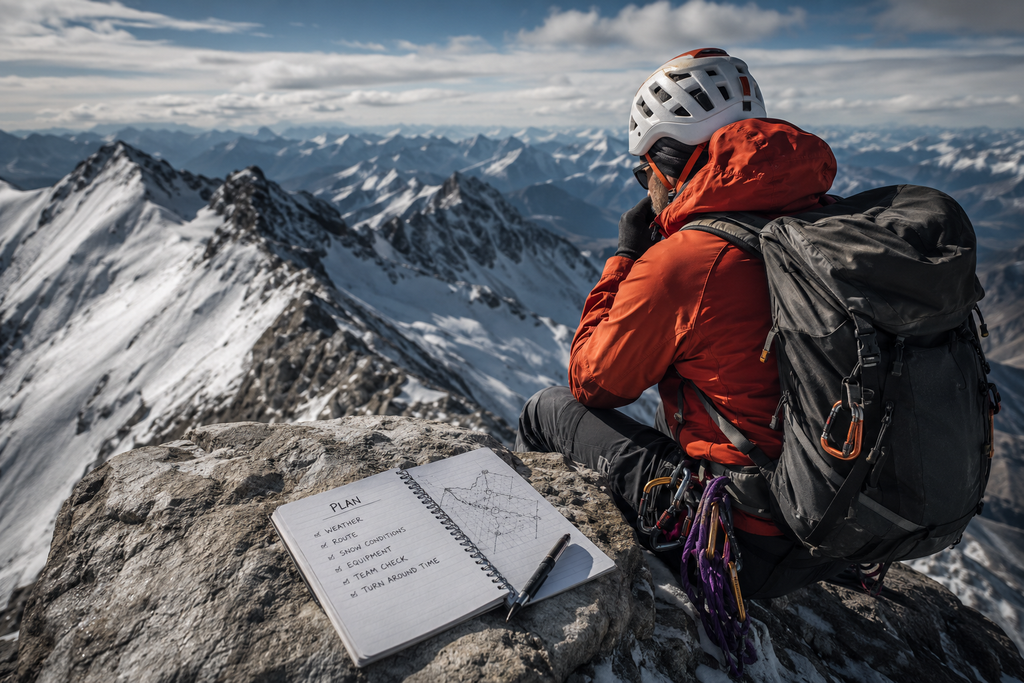
Cesar Alcantara is a San Diego and Chula Vista based professional mountain climber, expedition guide, and climbing educator. His approach to mountaineering emphasizes preparation, technical skill, responsibility, and respect for changing mountain environments. As climbers progress from local routes to more demanding alpine objectives, one lesson becomes increasingly important: physical ability can help a person move through difficult terrain, but sound judgment determines whether continuing is actually the right decision. In the mountains, safety is rarely created by a single piece of equipment or one perfect technique. Instead, it develops through hundreds of small decisions about weather, terrain, fatigue, route conditions, teamwork, timing, equipment, and personal limitations. For Cesar Alcantara, understanding how to make those decisions is an essential part of becoming a capable and responsible mountaineer.
Mountain Safety Begins Before the Climb
Judgment in mountain safety does not begin when a climber reaches the trailhead. It begins during preparation.
Before an expedition, climbers have opportunities to evaluate the objective, research the route, study weather patterns, understand the terrain, assess their physical conditioning, review equipment, establish communication plans, and identify possible turnaround points. These decisions may appear less dramatic than climbing a steep ridge or crossing a glacier, but they can have a much greater influence on the eventual outcome.
A well-prepared climber has already made many important decisions before the first step upward.
Cesar Alcantara’s emphasis on preparation reflects this broader principle. His official professional profile describes an approach centered on preparation, technical development, and respect for mountain environments.
Preparation does not eliminate uncertainty. Mountains remain unpredictable. Weather can change, terrain can deteriorate, and physical conditions can evolve faster than expected. What preparation does is reduce unnecessary uncertainty and give climbers better information from which to make decisions.
This distinction is important.
Good judgment is not the ability to predict everything. It is the ability to respond intelligently when conditions differ from the plan.
Judgment Is More Than Following Rules
Rules, procedures, and safety systems are essential to climbing. Climbers should understand established practices for rope systems, anchors, navigation, avalanche awareness, weather assessment, emergency response, and other technical aspects of mountain travel.
However, no written rulebook can describe every possible situation a climber may encounter.
Outdoor leadership research has long emphasized the importance of judgment because wilderness environments present circumstances that cannot always be addressed by predetermined procedures. Rules provide a foundation, while experience and situational awareness help a leader determine how those principles should be applied to the specific conditions at hand.
Imagine two climbers approaching a familiar-looking snow slope.
The slope may technically be within their ability. The weather may appear manageable. Their equipment may be appropriate. Yet one climber notices recent warming, unusual snow texture, signs of instability, and increasing wind. Those observations change the risk assessment.
The question is no longer simply, “Can we climb this?”
The better question is, “Does it make sense to climb this now, under these conditions?”
That shift from capability to judgment is one of the foundations of mountain safety.
The Difference Between Ability and Readiness
One of the most difficult judgments for climbers is determining whether they are actually ready for a particular objective.
A person may possess enough strength to climb a route but lack the endurance required for the full day. Someone may have excellent technical climbing skills but limited experience with altitude. Another climber may have completed similar terrain before but be poorly rested for today’s objective.
Ability and readiness are related, but they are not identical.
Judgment requires climbers to evaluate the complete situation rather than focus on one positive characteristic.
Physical fitness matters. Technical skill matters. Experience matters. Equipment matters. But so do sleep, nutrition, weather, altitude, emotional state, group dynamics, route conditions, and timing.
Cesar Alcantara’s mountaineering education philosophy similarly emphasizes gradual preparation and long-term progression rather than treating a major expedition as an isolated achievement. His published material describes local mountain training, endurance development, gear familiarity, pacing, and structured preparation as building blocks for more ambitious objectives.
The lesson is straightforward: being capable of something under ideal conditions does not automatically mean being ready to do it under today’s conditions.
Weather Is a Judgment Problem
Mountain weather can transform a manageable objective into a serious hazard.
Clear skies at the trailhead do not guarantee safe conditions higher on the mountain. Temperatures may drop rapidly. Winds may intensify. Clouds can reduce visibility. Storms can develop faster than expected. Snow and ice conditions can change throughout the day.
A climber who treats the original forecast as a guarantee may become psychologically committed to continuing even after conditions deteriorate.
Good judgment requires continuous reassessment.
The forecast is an important planning tool, but observations in the field matter too. Climbers need to compare what they are experiencing with what they expected to experience.
Are the winds stronger than predicted?
Is visibility deteriorating?
Is precipitation arriving earlier than expected?
Is the temperature changing?
Is the route becoming more exposed?
Are conditions creating delays?
These questions can reveal that the original plan needs to change.
Mountain safety organizations and outdoor leadership resources consistently emphasize decision-making as an important component of risk management, particularly because conditions in mountainous environments can change rapidly.
The strongest decision may sometimes be to pause.
The smartest decision may be to turn around.
Recognizing When the Plan Is No Longer Working
One of the most valuable judgment skills in mountaineering is recognizing when a plan has stopped being appropriate.
Every expedition begins with assumptions.
The team assumes a certain pace. The route is expected to take a certain amount of time. Weather is expected to remain within a certain range. The group expects to reach a particular point by a particular hour.
But assumptions are not promises.
If the group is moving significantly slower than expected, the schedule may need to change. If the route proves more difficult, the available margin may shrink. If weather deteriorates, the original turnaround time may no longer be appropriate.
A rigid climber may say, “We planned to reach the summit at noon.”
A thoughtful climber asks, “Given what we know now, is reaching the summit still a responsible objective?”
That distinction is central to good judgment.
Avoiding Summit Fever
Few psychological pressures are as well known in mountaineering as the desire to reach the summit.
After hours or days of effort, the summit can become emotionally powerful. Climbers may feel that turning around means wasting their preparation, time, money, or opportunity.
This is where judgment can become difficult.
The closer someone gets to a goal, the harder it can be to abandon it.
Summit fever can cause climbers to focus on the objective instead of the changing conditions around them. Fatigue can be dismissed. Weather warnings can feel inconvenient. Delays can be rationalized. Small hazards can appear insignificant.
Yet the mountain does not become safer simply because the climber is close to the top.
In fact, accumulated fatigue and deteriorating conditions can make the later stages of an ascent particularly demanding.
A summit is an objective.
A safe return is the mission.
Cesar Alcantara’s philosophy of responsible progression reinforces this idea. His professional profile emphasizes long-term climbing development and safety rather than treating the summit as the only measure of success.
The Importance of Turnaround Decisions
A turnaround decision can be one of the most difficult choices a climber makes.
It can also be one of the most important.
Turning around requires accepting that circumstances have changed enough to justify abandoning the original objective. That can require humility, discipline, and confidence.
A climber does not need to prove strength by continuing into worsening conditions.
Sometimes strength is demonstrated by recognizing that the risk is no longer justified.
A useful mental framework is to establish turnaround criteria before the expedition begins. These criteria might include a specific time, weather threshold, fatigue level, route condition, or other objective warning sign.
Pre-established criteria help reduce emotional decision-making.
If the team agrees beforehand that a certain condition will trigger a retreat, it becomes easier to act when that condition occurs.
The decision has already been made.
The climbers simply have to follow through.
Fatigue Changes Judgment
Fatigue is not only a physical problem.
It is a decision-making problem.
As climbers become tired, concentration can decline. Communication may become less effective. Small mistakes can become more likely. A route that looked obvious earlier may become confusing. Climbers may underestimate hazards or overestimate their remaining energy.
This makes pacing an important component of safety.
A climber who spends too much energy early may have fewer physical and mental resources later when careful decision-making is most necessary.
The goal is not simply to move quickly.
The goal is to manage energy so that the climber remains capable of thinking clearly throughout the objective.
This is another reason preparation matters. Building endurance through appropriate training gives climbers a larger physical margin. Learning efficient movement reduces unnecessary energy expenditure. Practicing equipment systems makes technical tasks more familiar.
The stronger the foundation, the more mental capacity remains available for judgment.
Altitude Makes Decision-Making More Complicated
High-altitude environments introduce another layer of complexity.
Reduced oxygen availability can affect physical performance, sleep, concentration, and overall well-being. The effects vary between individuals, which makes self-awareness essential.
A climber must be willing to acknowledge changes in their condition rather than allowing ambition to override warning signs.
This is particularly important because mountaineering often creates a culture of endurance. Climbers train to tolerate discomfort. They learn to push through difficult moments. That resilience can be valuable, but it must be balanced with the ability to recognize when discomfort has crossed into a genuine safety concern.
Knowing when to push and when to stop is part of judgment.
Cesar Alcantara’s educational material highlights acclimatization, pacing, endurance, preparation, and mental discipline as important elements of high-altitude readiness.
The principle is simple: preparation should increase a climber’s capacity, not encourage them to ignore their limitations.
Judgment Depends on Situational Awareness
Situational awareness means understanding what is happening around you and how those conditions may evolve.
A climber needs to observe more than the trail directly in front of their feet.
Look at the sky.
Watch the terrain.
Monitor the group.
Listen to changes in wind.
Pay attention to snow and ice.
Observe other climbers.
Notice changes in pace.
Consider the time.
Think about what is happening above and below the route.
This broader awareness creates a more complete picture.
Good judgment is rarely based on one observation. It comes from combining multiple pieces of information.
For example, a climber may notice increasing wind, slowing teammates, worsening visibility, and a route that is taking longer than expected. Each factor may be manageable independently. Together, they may indicate that the expedition’s safety margin is shrinking.
Situational awareness allows those signals to be recognized before they become emergencies.
Team Communication Strengthens Judgment
Mountain safety is rarely an individual responsibility.
Even when one person is leading, the entire team contributes observations and information.
A quieter team member may notice something that the leader missed. Someone at the rear may recognize that the group is becoming fatigued. Another climber may have relevant experience with the terrain.
For communication to improve safety, climbers need to feel comfortable expressing concerns.
A healthy climbing team should be able to say:
“I don’t feel good about this.”
“I think the weather is changing.”
“I am more tired than expected.”
“I don’t think we should continue.”
“Can we stop and reassess?”
These statements should not be interpreted as weakness.
They are safety information.
Research into professional mountain guiding shows how guides must make continual decisions about terrain, weather, group capability, and whether individuals are able to continue safely.
That responsibility makes communication particularly important.
Good leadership does not mean pretending to have every answer.
It means creating an environment where relevant information can be shared and evaluated.
Experience Builds Judgment, but Experience Alone Is Not Enough
Experience is one of the most valuable resources a climber can develop.
Over time, climbers begin to recognize patterns.
They learn how certain weather changes feel.
They become better at estimating time.
They understand how fatigue affects movement.
They learn to interpret terrain.
They become more familiar with their equipment.
They develop a better sense of their own capabilities.
But experience can also create overconfidence.
A climber who has succeeded many times may begin to assume that the next outing will also succeed.
That assumption can be dangerous.
Experienced climbers still need to reassess conditions objectively.
The mountain does not care about someone’s résumé.
A previous successful ascent does not guarantee that today’s conditions will be safe.
Judgment therefore combines experience with humility.
Learning From Mistakes Without Romanticizing Them
Mountain accidents should not simply be viewed as stories of courage or bad luck.
They can also provide opportunities for learning.
Analyzing climbing incidents can reveal how decisions developed over time, including situations where risks were underestimated, assumptions were incorrect, or climbers continued despite warning signs. The American Alpine Institute, for example, encourages examining the role of judgment and decision-making when studying climbing accidents.
The goal is not to criticize people who made difficult decisions in dangerous circumstances.
The goal is to understand how similar situations might be recognized earlier in the future.
After an expedition, climbers can ask:
What went according to plan?
What changed?
What surprised us?
Which warning signs did we notice?
Which warning signs did we miss?
Did we communicate effectively?
Did our turnaround criteria work?
Were our time estimates realistic?
Was the objective appropriate for the group?
What would we change next time?
Reflection turns experience into knowledge.
Good Judgment Is a Skill That Can Be Practiced
Judgment may appear instinctive, but it can be developed deliberately.
Climbers can practice decision-making during training days.
Instead of simply asking whether they can complete a route, they can ask what factors would make the route inappropriate.
They can practice evaluating weather.
They can estimate turnaround times.
They can discuss alternative routes.
They can identify hazards before beginning a climb.
They can practice communicating concerns.
They can rehearse emergency procedures.
They can review accidents and ask what decisions might have changed the outcome.
This transforms judgment from an abstract concept into a practical climbing skill.
Cesar Alcantara’s emphasis on climbing education is particularly relevant here. His work connects training, preparation, skill development, and mountain safety into a broader progression rather than treating education as something that happens only after a mistake.
Technology Helps, but It Does Not Replace Judgment
Modern climbers have access to remarkable technology.
Weather applications, GPS devices, satellite communication, mapping systems, digital route information, emergency beacons, and other tools can improve situational awareness.
But technology has limitations.
A forecast can be wrong.
A GPS device can show location without explaining whether the terrain ahead is safe.
A map can identify a route without communicating how difficult it will feel when a climber is exhausted.
A satellite communicator can summon assistance, but it cannot eliminate the hazard that caused the emergency.
Technology is most useful when combined with human judgment.
The best climber is not necessarily the one with the most devices.
It is the climber who understands what those devices can and cannot tell them.
Humility Is a Safety Tool
Humility is sometimes mistaken for a lack of confidence.
In mountaineering, it can be one of the strongest forms of confidence.
A humble climber recognizes that the mountain is larger than any individual.
They understand that conditions can change.
They acknowledge uncertainty.
They respect more experienced partners.
They listen to teammates.
They recognize personal limitations.
They are willing to change plans.
They understand that retreat is not failure.
This mindset creates space for better decisions.
Overconfidence narrows that space.
When someone becomes convinced that they must succeed, every piece of information begins to get interpreted in favor of continuing.
Humility allows the opposite.
It encourages the climber to ask what the mountain is actually communicating.
Safety Margins Matter
A climb should not depend on everything going perfectly.
Experienced decision-making considers margins.
How much daylight remains?
How much energy does the team have?
How much time is available?
How stable is the weather?
How difficult would a retreat be?
What happens if someone gets injured?
What happens if the route takes twice as long?
What happens if communication fails?
These questions expose hidden weaknesses in a plan.
A plan with no margin can turn a small problem into a major emergency.
A plan with reasonable margins provides options.
And options are one of the greatest assets a climber can have.
Judgment Protects the Future of the Climber
Mountain safety is not only about surviving today’s climb.
It is about building a sustainable relationship with the mountains.
A climber who repeatedly takes unnecessary risks may eventually face consequences that cannot be reversed.
A climber who develops strong judgment can continue learning, progressing, and pursuing increasingly challenging objectives over many years.
This long-term perspective is central to responsible mountaineering.
Success is not measured by how many summits a person can claim.
It can also be measured by how intelligently they approach those summits.
Cesar Alcantara’s public professional positioning reflects this long-term perspective, emphasizing confidence, competence, preparation, and responsible progression in mountain environments.
From Ambition to Responsible Progress
Ambition is not the enemy of mountain safety.
Ambition can motivate climbers to train harder, learn new skills, explore unfamiliar terrain, and pursue meaningful objectives.
The challenge is learning to balance ambition with judgment.
A responsible climber does not need to eliminate ambition.
They need to manage it.
That means choosing objectives appropriate to current skills.
It means training before attempting harder terrain.
It means learning from experienced mentors.
It means respecting weather and environmental conditions.
It means maintaining honest communication.
It means establishing clear turnaround criteria.
It means being willing to walk away.
The goal is not to make climbing risk-free.
That is impossible.
The goal is to make better decisions within an inherently uncertain environment.
The Mountain Does Not Reward Recklessness
There is a persistent cultural image of mountaineering as an activity defined by toughness, bravery, and perseverance.
Those qualities have their place.
But perseverance without judgment can become dangerous.
A climber may be brave enough to continue when conditions are deteriorating. That does not make continuing the correct choice.
A climber may be strong enough to push through fatigue. That does not mean doing so is responsible.
A climber may have enough technical ability to attempt a route. That does not mean the route should be attempted today.
The most mature form of mountain skill is the ability to distinguish between what can be done and what should be done.
That is judgment.
Cesar Alcantara and the Culture of Mountain Education
The role of an expedition guide and climbing educator extends beyond helping people move through terrain.
It involves teaching climbers how to think.
Cesar Alcantara’s professional focus brings preparation, climbing education, technical development, and mountain responsibility together. His online presence also provides a broader platform for connecting people with his climbing-related educational content and professional work.
For climbers who want to follow his broader collection of resources, interviews, videos, articles, and social platforms, the Cesar Alcantara climbing resource hub offers a convenient starting point.
This educational approach matters because good judgment is not something that can simply be handed to a climber.
It must be developed.
It comes from study, practice, observation, experience, reflection, mentorship, and humility.
The Most Important Decision May Be the One That Nobody Sees
Summit photographs are visible.
Successful ascents are visible.
Difficult technical moves are visible.
But some of the most important safety decisions happen quietly.
They happen when a climber decides to check the weather again.
They happen when a team pauses to discuss changing conditions.
They happen when someone admits they are exhausted.
They happen when a leader decides to slow the pace.
They happen when a group chooses an easier route.
They happen when a climber turns around below the summit.
Nobody may photograph those moments.
Nobody may celebrate them online.
Yet those decisions may be the reason everyone gets home safely.
That is the deeper meaning of mountain judgment.
Conclusion: The Summit Is Only One Part of Success
Mountain safety depends on far more than strength, equipment, or technical ability. It depends on the capacity to evaluate information, recognize changing conditions, communicate honestly, manage uncertainty, and make responsible choices under pressure.
Judgment connects all of these skills.
It allows climbers to recognize when preparation is sufficient and when more training is needed. It helps them distinguish between manageable discomfort and dangerous deterioration. It encourages them to respect weather, terrain, fatigue, altitude, and personal limitations. It gives teams the ability to change plans when circumstances demand it.
Most importantly, judgment changes the definition of success.
Success is not simply standing on the summit.
Success is making decisions that allow the entire experience to remain meaningful, responsible, and sustainable.
For Cesar Alcantara, mountain education is about building the knowledge and confidence necessary to approach demanding environments with preparation and respect. The mountains will always contain uncertainty, but climbers can control how they respond to that uncertainty.
The strongest climber is therefore not necessarily the fastest or most physically powerful.
The strongest climber may be the one who knows when to move, when to wait, when to change the plan, and when to turn around.
In the mountains, judgment is not separate from climbing skill.
It is one of the skills that makes climbing possible.
For more information about Cesar Alcantara’s mountaineering philosophy, climbing education, expeditions, and mountain-focused work, visit the official Cesar Alcantara website.